

Protection of Human Rights Defenders and Expansion of Political Space
The UNESCO Chair in the Protection of Human Rights Defenders and Expansion of Political Space is based at the Centre for Applied Human Rights (CAHR), University of York (UK). The goal of the Chair, and its network of university and civil society partners, is to enhance the role of universities in activism and protection.
The Chair will develop communities of practice, understood as multi-stakeholder spaces for dialogue; exchange of experience, knowledge and learning; trialling grounds for collaboration and innovation; and routes to impact.
Key activities of the Chair to date include bringing together universities, NGOs, donors and human rights defenders to co-produce Guidelines for Universities Hosting Human Rights Defenders and supporting the establishment of three regional university hubs. The Guidelines represent an invitation for universities to get involved in hosting human rights defenders, a source of inspiration about why this work matters, and a guide and set of tools on how to provide support and become part of the protection ecosystem. The aim of the regional hubs—in Africa, Asia and Latin America—is to support the localisation of protection closer to defenders’ home countries.
Universities can play diverse roles in championing and protecting activism and activists. These roles require engagement with three core themes:
Latest News and Recent Publications
-

New Research: From Stabilisers to Enablers? What Universities Can Do for Activists in Exile
Exile has become an increasingly common reality for human rights defenders as authoritarianism expands globally. Whilst this can undermine activism, exile may also create opportunities for re-imagined forms of political engagement. This working paper explores the role of universities in sustaining activist agency in exile, focusing on three countries - Germany, the Czech Republic and Thailand - which host a significant number of Russia and Myanmar exiles.
In a blog to accompany the paper the authors - May Thida Aung and Alexander Kalgin - argue that practices developed outside formal protection rules may offer valuable insights into how protection measures could become more responsive, accessible, and sustainable.
-

New Research: University Human Rights Obligations in Procurement and Investiment
This new working paper by Professor Wouter Vandenhole highlights the multiple reasons why universities should make their procurement and investment human rights compliant. This is not just a matter of making the business case. Above all, and that is the premise of this paper, they have a human rights responsibility to do so. Universities are emerging human rights duty-bearers. This means that institutional neutrality is not an option. Universities must assume human rights responsibility, at a minimum in light of their moral responsibility to respect human rights, and often in light of their legal obligations to protect and fulfil human rights in their sphere of influence.oes here
-
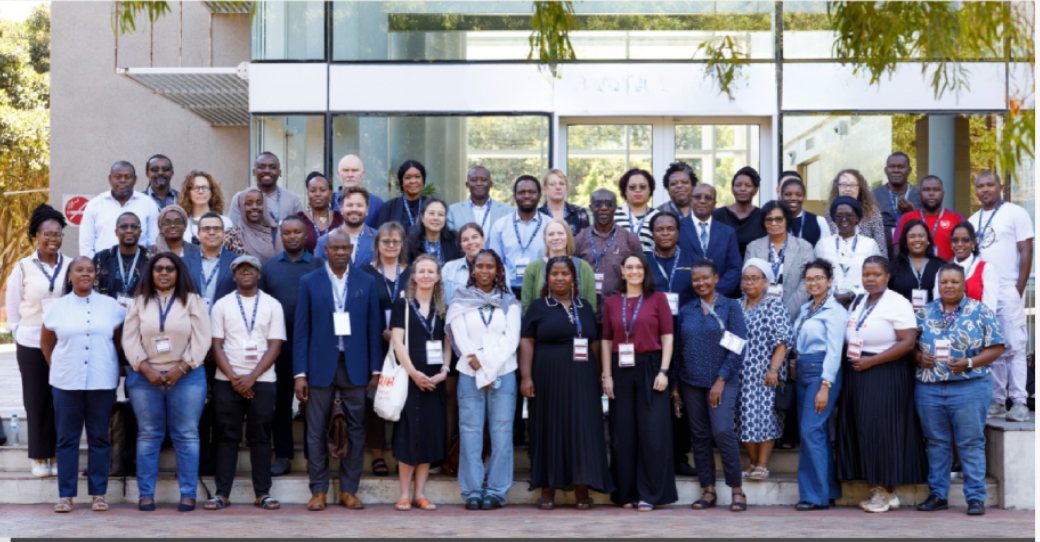
African Universities Hub: 2026 Symposium Report
The African Universities Hub for Human Rights (Africa Hub), an initiative of the Politics and Urban Governance Research Group at the University of the Western Cape (UWC) convened the 2026 symposium in partnership with the UNESCO Chair on the Protection of Human Rights Defenders and Expansion of Political Space, University of York and the UWC Chair on Citizenship and Democracy. This event, brought together 46 participants from universities, civil society organisations, and donor institutions working on democracy and the protection of human rights defenders across 22 countries in Africa, Asia, South America, and Europe. The symposium responded to a context defined by intensifying democratic backsliding and the systematic contraction of civic space. Participants pointed to a shift from episodic repression to more institutionalised forms of control, with significant implications for both HRDs and the institutions that support them.